Flood restoration services in Valley Village, California
Fast water extraction, drying, and full rebuild after any flood
When water hits your floor at 2 a.m., flood restoration services in Valley Village, California get it out and get it dry before mold sets in. We handle burst supply lines, sewage backups, roof leaks, and storm flooding across Valley Village and the surrounding San Fernando Valley neighborhoods. Our IICRC-certified crews arrive with truck-mounted extractors and thermal imaging cameras, document everything for your insurance claim, and rebuild what the water ruined. One call, one team, start to finish.
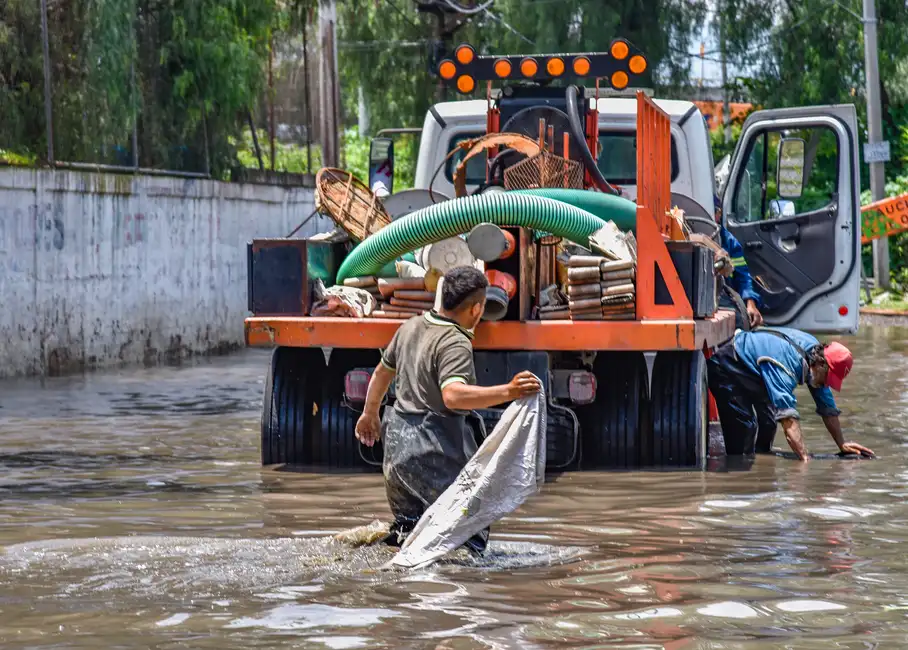
What flood restoration services in Valley Village, California actually involve
flood restoration services in Valley Village, California is the full-scope trade that removes standing water from a home or business, dries the structure to documented standards, and repairs everything the moisture damaged. It is not just a pump-and-go job. We extract water with a truck-mounted water extractor, map hidden moisture using a thermal imaging camera and moisture meter, then run air movers and dehumidifiers until the framing, drywall, and subflooring hit dry standard per ANSI/IICRC S500. Only then do we rebuild, which means replacing baseboard, drywall, paint and primer, and flooring as needed.
Valley Village homes flood for predictable reasons. The neighborhood's 1940s and 1950s ranch houses still run original galvanized supply lines that corrode and burst, and slab leaks show up under tile floors without warning. Winter storms push water through roof leaks and foundation leaks, while a failed sump pump or a backed-up sewage line turns a garage or basement into a swamp. If you are searching for flood damage restoration near me Valley Village, the sooner we extract, the less you replace. Mold growth after water damage can start within 24 to 48 hours.
Why Valley Village homeowners call us first
Flooding is a race against time and mold. Here is what you get when you call us instead of a general handyman with a wet-vac.
24/7 emergency dispatch
Water does not wait for business hours, so neither do we. Our crews roll out around the clock across Valley Village and North Hollywood, and we aim to be on-site within 60 to 90 minutes of your call. That speed is the difference between drying drywall and replacing it.
Insurance claim documentation
We photograph every affected room, log moisture readings, and build a line-item scope in Xactimate that your adjuster can read. That flood damage restoration with insurance claim help Valley Village homeowners rely on means fewer denied line items and faster payouts, because the paperwork is done right the first time.
Certified drying, not guesswork
Every technician holds IICRC WRT and IICRC ASD credentials, and we dry to ANSI/IICRC S500 standards. We leave a written drying log with daily moisture readings, so you can see exactly when your structure crossed back into the safe zone instead of taking our word for it.
One team from flood to finish
We extract, dry, remediate, and rebuild. That means no juggling three contractors or waiting weeks for a drywall guy to show up. Our CSLB C-61/D-38 licensed crews handle the whole job, from the first wet-vac pass to the final coat of paint and primer.
Our five-step flood restoration process
Every job follows the same sequence, whether it is a toilet overflow in a condo or a foot of storm water in a garage. Here is what you experience from the first call to the final walkthrough.
Emergency call and dispatch
You call, we ask a few questions about the source and the square footage, and we dispatch the nearest crew. In most of Valley Village we are on-site within 60 to 90 minutes. First thing we do is stop the water if it is still running, then walk the property with you to map the damage.
Water extraction
We pull standing water with a truck-mounted water extractor and portable water extraction units for tight spaces like closets and crawl spaces. Extraction on a typical 800-square-foot affected area takes two to four hours. Once the bulk water is gone, we check the slab and subflooring with a moisture meter.
Drying and monitoring
We set air movers and dehumidifiers based on the room count and moisture load, then check readings daily with a hygrometer and thermal imaging camera. Most Valley Village homes dry in three to five days. We adjust equipment as readings drop and leave the gear until the structure hits dry standard.
Cleaning and sanitizing
Any water that touched sewage, or sat long enough to grow mold, gets treated. We apply antimicrobial solution, run a HEPA vacuum and negative air machine where needed, and use an ozone generator for odor. Contaminated drywall and baseboard come out, and we treat the framing before closing anything back up.
Repairs and final walkthrough
We replace drywall, baseboard, subflooring, and flooring as needed, then paint and primer to match. Before we call the job done, we do a final moisture check and walk the property with you room by room. You get the drying log, the photo documentation, and a written scope for your records.
Four years of hands-on flood restoration in the Valley
Water Damage Restoration Valley Village has been restoring flooded homes since 2022, and in that time we have worked hundreds of jobs across Valley Village, Studio City, Sherman Oaks, and the surrounding San Fernando Valley. Our technicians carry IICRC WRT, IICRC ASD, IICRC AMRT, and IICRC FSRT certifications, and we operate under CSLB C-61/D-38 licensing with EPA Lead-Safe Certification for older homes. We know the difference between a 1948 ranch house with a pier-and-beam foundation and a 1990s condo slab, and we dry each one differently. That local pattern recognition is why our re-dry rate stays low and our rebuilds hold up.
- IICRC WRT and ASD certified technicians on every water job
- CSLB C-61/D-38 licensed for both drying and structural repair
- EPA Lead-Safe Certified for pre-1978 Valley Village housing stock
- Xactimate-trained estimators who speak your adjuster's language
- OSHA 10 and OSHA 30 trained crews on every active job site
Why our flood restoration services in Valley Village stand apart
Plenty of companies own a truck and a wet-vac. Fewer can dry a structure to standard, document it for insurance, and rebuild it. Here is what separates our operation.
On-site in 60 to 90 minutes
Our dispatch is built around the San Fernando Valley, not a call center three states away. When you call (833) 321-7153, you reach a live person who knows Valley Village streets. We give you a real arrival window and we hit it, day or night, weekends and holidays included.
We document everything
Every job gets daily moisture readings, room-by-room photos, and a written drying log. That documentation is what turns a disputed insurance claim into a paid one. Adjusters trust our numbers because they are recorded, not estimated after the fact.
Drying and rebuild under one license
Our CSLB C-61/D-38 license covers both the mitigation and the repairs, so you are not stuck coordinating a drying company and a separate contractor. That single point of accountability is why flood cleanup and restoration Valley Village customers stay with us through the whole project.
We dry to a standard, not a feeling
We follow ANSI/IICRC S500 for water and ANSI/IICRC S520 for mold, and we verify with a moisture meter and hygrometer before we pull equipment. If your walls are still wet, the job is not done. That is the standard behind every 24/7 flood restoration services Valley Village California call we take.
What our flood restoration services include
Every flood restoration services job in Valley Village starts with a free on-site assessment and a written scope. From there, the work falls into two phases: mitigation, which stops the damage, and reconstruction, which puts your home back the way it was. Here is what is covered in a standard job.
What's Included
Emergency water extraction
We remove standing water with a truck-mounted water extractor and portable units for tight spaces. A typical 800-square-foot affected area takes two to four hours. We also stop the water source if it is still running, whether that is a burst pipe, a failed water heater, or an overflowing appliance.
Structural drying and monitoring
Air movers and dehumidifiers run until the framing, drywall, and subflooring hit dry standard per ANSI/IICRC S500. We check daily with a moisture meter and hygrometer and leave a written drying log. Most Valley Village homes dry in three to five days.
Cleaning, sanitizing, and odor control
We treat affected surfaces with antimicrobial solution, run HEPA vacuums and negative air machines where contamination is a concern, and use ozone generators for odor. Sewage backups get full disinfection with EPA-registered products before any rebuild begins.
Mold inspection and treatment
We check for mold growth after water damage with a bore scope camera and thermal imaging camera, then contain and treat any affected areas per ANSI/IICRC S520. Contaminated drywall, insulation, and baseboard come out before we close anything back up.
Drywall, flooring, and paint repairs
Our CSLB C-61/D-38 licensed crews replace drywall, baseboard, subflooring, wood flooring, tile, and grout as needed, then paint and primer to match. You get one team from the first extraction to the final walkthrough, not a handoff between contractors.
Insurance claim documentation
We photograph every affected room, log moisture readings, and build a line-item scope in Xactimate your adjuster can read. That documentation is what supports the claim and reduces the chance of denied line items, which matters when the repair bill runs into the thousands.
Flood problems we solve for Valley Village homeowners
Most floods in Valley Village come from a handful of predictable failures. Here are the ones we see most, and what happens if they are left alone.
Burst supply line under the sink or in the wall
Water runs for hours before anyone notices, soaking cabinets, drywall, and subflooring. Left wet more than 48 hours, mold growth after water damage starts and the repair scope doubles.
We shut off the water, extract with a truck-mounted water extractor, and dry the cabinet bases and wall cavities with air movers and dehumidifiers. We check moisture daily until the structure reads dry, then repair the drywall and flooring the leak ruined.
Sewage backup through a floor drain or toilet
Category 3 water carries bacteria and pathogens. A shop vac and a mop spread contamination rather than remove it, and the odor lingers for months if the source is not properly treated.
Our crews extract the contaminated water, remove affected baseboard and drywall, and disinfect with EPA-registered antimicrobial solution. We run a negative air machine to contain the area and finish with odor treatment. This is not a job for a wet-vac and a fan.
Roof leak or ceiling leak during winter storms
Water travels along framing and pools in the ceiling cavity, then sags the drywall and drips into the room below. Attic insulation stays wet and grows mold out of sight.
We find the entry point, extract any standing water, and dry the attic and ceiling cavity with air movers and dehumidifiers. Contaminated insulation comes out, framing gets treated, and we replace the sagging drywall and paint as part of the same job.
Slab leak under tile flooring
A slab leak in a Valley Village ranch home often goes unnoticed until the floor feels warm or the water bill spikes. By then the subflooring and baseboard have wicked moisture for weeks.
We locate the leak with a thermal imaging camera and moisture meter, dry the slab and surrounding structure, and repair the damaged flooring. If the leak is under tile, we remove the affected tile and grout, dry the slab, and reinstall once readings are safe.
When to call for flood restoration services
A water heater in the garage fails overnight and floods the adjacent room and hallway.
We extract the standing water, remove the failed unit's water, and dry the garage slab, hallway flooring, and any drywall that wicked moisture. A dehumidifier and air movers run for three to four days until readings hit dry standard.
The garage and hallway are dry, the baseboard and drywall are repaired, and you avoid the mold that would have shown up in week two.
A winter storm pushes water through a foundation leak into a finished basement.
We pump out the standing water, extract from the carpet and pad, and dry the slab and framing. If the water reached drywall, we cut out the affected section, treat the framing, and replace it after drying.
The basement is dry and usable again, typically within a week, with no musty odor and no mold behind the walls.
A toilet overflows on the second floor and water runs through the ceiling below.
We treat it as a Category 3 sewage backup: extract, remove contaminated ceiling drywall and insulation, disinfect with EPA-registered products, and dry the joists and subflooring. Then we rebuild the ceiling and repaint.
The contamination is gone, the ceiling is repaired, and the room below is safe to use again without lingering odor.
A dishwasher leak soaks the kitchen cabinets and subfloor over a weekend.
We pull the dishwasher, extract the water, and dry the cabinet bases and subflooring with air movers and a dehumidifier. A bore scope camera confirms whether water reached the wall cavity behind the cabinets.
The cabinets and subfloor dry without warping, and the flooring is repaired so you are not replacing the whole kitchen.
Tools and methods we use on every flood job
Tools & Equipment
Truck-mounted water extractor
Pulls large volumes of standing water fast from carpet, hardwood, and slab. It is the first piece of equipment on site and the one that limits how much material has to be replaced.
Thermal imaging camera
Reveals hidden moisture behind walls and under floors without cutting into them. We use it to map the true extent of the flood before we set drying equipment.
Moisture meter and hygrometer
Measures moisture content in framing, drywall, and subflooring and tracks relative humidity in the air. These readings are what tell us when the structure has hit dry standard.
Dri-Eaz and Phoenix air movers and dehumidifiers
Move air across wet surfaces and pull moisture out of the air. We size the equipment count to the room volume and moisture load, then adjust as readings drop.
Bore scope camera
Lets us look inside wall cavities and under cabinets without demolition. It confirms whether water reached the framing before we decide what to open up.
HEPA vacuum and negative air machine
Captures fine particles and mold spores during cleanup and keeps contaminated air from spreading to clean rooms. Standard equipment on any job involving sewage or mold.
Ozone generator
Neutralizes odor left behind by sewage, mold, or long-standing water. We run it after extraction and cleaning, never while anyone is in the space.
Methods
ANSI/IICRC S500 water damage standard
The industry standard for drying wet structures. It defines how much moisture is acceptable, how to classify the water, and how to document the dry-down. We follow it on every job and leave the readings to prove it.
ANSI/IICRC S520 mold remediation standard
The standard for handling mold growth after water damage. It covers containment, removal of contaminated material, and treatment of affected surfaces. We apply it whenever mold is present or likely.
Xactimate estimating
The line-item estimating platform most insurance adjusters use. Building the scope in Xactimate means your claim is written in the format the adjuster expects, which speeds approval and reduces disputes over line items.
Antimicrobial treatment with Benefect and Concrobium
After extraction and cleaning, we treat affected surfaces with EPA-registered antimicrobial solution. Benefect and Concrobium are our standard products for porous and semi-porous materials where mold and bacteria are a concern.
How flood restoration services run in Valley Village
Valley Village sits in the San Fernando Valley, where summer heat bakes the ground and winter storms drop rain fast enough to overwhelm older drainage. The neighborhood's housing stock is mostly 1940s and 1950s ranch homes with pier-and-beam foundations, original galvanized plumbing, and mature ficus and pine roots that crack sewer laterals and water lines. That combination means we see a lot of slab leaks, root intrusion, pipe bursts, and sewage backups, plus roof leaks and ceiling leaks when the winter rains hit. When you call for flood damage restoration Valley Village, we already know what we are walking into. We bring a bore scope camera for crawl spaces, a thermal imaging camera for slab leaks, and enough drying equipment to handle a whole floor. If you need same-day flood restoration services in Valley Village California during a storm, call early, because the queue fills fast. We also coordinate with your insurance adjuster and build the scope in Xactimate so the claim moves.
Service Areas
Older ranch homes with original plumbing and mature tree roots. Slab leaks and sewer backups are common, and crawl spaces need extra drying attention after any flood.
Larger homes with finished basements and multi-zone HVAC. When water gets into a finished basement here, the drying scope is bigger and the rebuild involves more flooring and drywall.
Mix of condos and single-family homes. Condo floods often start with a neighbor's supply line failure, so we coordinate with HOA management and document shared-wall moisture.
Newer construction with slab foundations and PVC plumbing. Leaks here tend to come from appliance failures and water heater failures rather than corroded pipes.
Local Considerations
Winter storm runoff and poor drainage
December through March, heavy rain overwhelms street drains and pushes water into garages and basements. We stage extra extractors and dehumidifiers during storm weeks to keep response times under 90 minutes.
Summer heat and slab movement
Valley summers expand and contract the soil, which stresses underground pipes. Slab leaks spike in late summer, and we use thermal imaging to find them without breaking up the whole floor.
Mature tree roots in sewer laterals
Ficus and pine roots crack older clay and cast-iron sewer lines, causing backups. When sewage is involved, we treat the job as Category 3 and disinfect with EPA-registered products.
Pre-1978 housing stock
Many Valley Village homes were built before lead paint was banned. Our EPA Lead-Safe Certification means we handle demolition and repairs without creating a lead hazard during the rebuild.
Kitchen supply line burst, Valley Village
A corroded supply line burst under the kitchen sink overnight and flooded 600 square feet of tile and hardwood. Water had wicked into the cabinet bases and the wall cavity behind the sink, and the baseboard was soaked through.
We extracted the standing water in about two hours and dried the structure in four days. Moisture readings dropped from 28 percent to 9 percent in the framing. We replaced 12 linear feet of baseboard, patched the drywall, and repainted the kitchen.
Maintenance & Follow-up
Check the supply lines under your sinks once a year for corrosion or bulging. Replacing a $15 line before it fails is far cheaper than a flood restoration job.
A root intrusion in the sewer lateral caused a backup through the downstairs bathroom, spreading Category 3 water across 200 square feet of tile and into the hallway carpet. The odor was strong and the baseboard was contaminated.
We extracted the contaminated water, removed 18 linear feet of baseboard and two feet of drywall, and disinfected with EPA-registered antimicrobial solution. The space dried in three days and the ozone treatment removed the odor completely. We rebuilt the wall and baseboard.
Maintenance & Follow-up
Have your sewer lateral scoped every two to three years if you have mature trees. Early root intrusion is a $300 fix; a backup is a $4,000 restoration.
January storms drove water through a failed roof flashing and into the attic and a bedroom ceiling. Insulation was soaked, the ceiling drywall sagged across a 4-by-6-foot section, and moisture had spread into the wall framing.
We removed the wet insulation, dried the attic framing and ceiling cavity over five days, and replaced the sagging drywall and paint. Moisture readings in the joists returned to 10 percent. No mold growth appeared in the follow-up check two weeks later.
Maintenance & Follow-up
Inspect roof flashing and attic insulation every fall before the rainy season. A $200 flashing repair prevents a $6,000 ceiling and attic restoration.
How much do flood restoration services cost in Valley Village California?
Most residential flood restoration jobs in Valley Village run $1,200 to $6,500, with typical 2026 pricing landing around $2,800 for a single-room extraction and dry-out. Cost depends on how much water there is, how far it spread, whether sewage is involved, and how much drywall or flooring needs replacing. Insurance usually covers the bulk of it when the cause is a burst pipe, supply line failure, or appliance leak.
What is the difference between flood cleanup and flood damage restoration in Valley Village?
Flood cleanup is the first phase: extracting standing water, removing soaked debris, and sanitizing surfaces. Flood damage restoration is the whole job, including drying the structure to ANSI/IICRC S500 standard, treating mold growth after water damage, and rebuilding drywall, baseboard, and flooring. Cleanup alone leaves moisture in the framing. Restoration does not stop until a moisture meter reads dry.
Does insurance cover flood restoration services in Valley Village California?
Standard homeowner policies cover sudden and accidental water damage, like a pipe burst, water heater failure, or dishwasher leak, and that usually includes extraction, drying, and repairs. Storm flooding and surface water typically need a separate flood policy through NFIP or a private carrier. We document every job in Xactimate, photograph the damage, and work directly with your adjuster to support the claim.
How long does flood restoration take in Valley Village?
Extraction takes two to four hours on a typical job. Drying runs three to five days for most Valley Village homes, and we check moisture readings daily to confirm progress. If rebuild work is needed, drywall, paint, and flooring add one to three weeks depending on scope and material availability. We give you a written timeline after the first walkthrough so you know what to expect.
Licensed, certified, and documented
Certifications
Reviews
Called at midnight when our water heater failed and flooded the hallway. They answered, gave us an arrival window, and showed up in about an hour. Extracted the water, set up dryers, and checked readings every day. The insurance paperwork was handled for us. Could not ask for more.
Sewage backup in our downstairs bathroom. They treated it seriously, wore protective gear, removed the contaminated drywall, and disinfected everything. The odor was gone after the ozone treatment. Honest about what needed replacing and what did not.
Roof leak during the storms soaked our attic and a bedroom ceiling. They dried the attic, replaced the insulation and drywall, and repainted. Kept us updated the whole time and finished when they said they would. No mold afterward.
Dishwasher leak ruined our kitchen subfloor over a weekend. They pulled the unit, dried everything, and repaired the flooring without replacing the whole kitchen. Fair price and clear scope from the start. Would call them again without hesitation.
Related Services
emergency water removal
Standing water comes out fast with our truck-mounted water extractor and portable units. For Valley Village homes with a burst pipe or appliance failure, this is the first step of flood restoration services and the one that limits how much of your floor and drywall survives.
emergency water removalmold remediation after water damage
Mold growth after water damage can start within 24 to 48 hours. We contain the area with plastic sheeting and a negative air machine, remove contaminated material, and treat framing with antimicrobial solution per ANSI/IICRC S520. This runs alongside or right after your flood restoration services in Valley Village.
mold remediation after water damagewater leak restoration
Slab leaks, supply line failures, and foundation leaks leave hidden moisture that ruins subflooring and baseboard. We locate the source with a bore scope camera and thermal imaging camera, dry the structure, and repair what the leak damaged, which is often the part of flood restoration services homeowners forget to budget for.
water leak restorationemergency water cleanup
Not every flood needs a full rebuild. For a toilet overflow or a small washing machine leak, emergency water cleanup means extraction, sanitizing with Benefect or Concrobium, and a short drying cycle. We tell you honestly when cleanup is enough and when full flood restoration services in Valley Village are warranted.
emergency water cleanupwater extraction
Our water extraction company uses Dri-Eaz and Phoenix Restoration Equipment extractors sized to the job. A 500-square-foot flooded area takes about two hours. Getting the bulk water out quickly is what keeps flood damage restoration Valley Village costs down, because less water means less replacement material.
water extractionwater damage mitigation
Mitigation is everything we do to stop the damage from spreading: extraction, containment, drying, and antimicrobial treatment. For Valley Village homeowners, fast mitigation is the difference between replacing one room of drywall and replacing four. It is the front half of every flood restoration services job we run.
water damage mitigationtoilet overflow cleanup
A toilet overflow is a Category 3 sewage backup, which means contaminated water and a real health risk. We extract, remove affected baseboard and drywall, and disinfect with EPA-registered products. This is a common entry point for flood restoration services in Valley Village condos and older ranch homes.
toilet overflow cleanupbasement flood cleanup
Valley Village basements and garages flood from sump pump failure, foundation leaks, and storm runoff. We pump out standing water, dry the slab and framing, and check for mold growth after water damage. If the space is finished, we handle drywall and flooring replacement as part of the restoration.
basement flood cleanupwater damage restoration near me
If you are searching for water damage restoration near me in Valley Village, you want a crew that knows the neighborhood. We work the 91607 and surrounding area daily, so we know the housing stock, the common failure points, and how to document a claim your adjuster will approve.
water damage restoration near mewater cleanup services
Our water cleanup services cover extraction, sanitizing, deodorizing, and drying for residential and small commercial properties. We use HEPA vacuums, negative air machines, and ozone generators when odor is a factor. It is the cleanup half of flood restoration services in Valley Village, done to standard.
water cleanup services24-hour water restoration near me
Water does not wait for morning. Our 24-hour water restoration crews answer calls at 2 a.m. and dispatch immediately across Valley Village, North Hollywood, and Studio City. Night calls are often burst supply lines and water heater failures, and early extraction saves thousands in replacement costs.
24-hour water restoration near mewater extraction company
As a dedicated water extraction company, we own the equipment that matters: truck-mounted extractors, portable units for tight spaces, and the moisture meters to prove the job is done. Valley Village customers get the same crew from extraction through the final drying check.
water extraction companyrapid water extraction
Rapid water extraction is about speed and coverage. We arrive with enough extractors and air movers to handle a whole floor, not just one room. For Valley Village homes with hardwood or tile over a slab, fast extraction is what prevents the subflooring from wicking water into the walls.
rapid water extractionkitchen water damage repair
Dishwasher leaks and supply line failures under the sink are the most common kitchen floods in Valley Village. We extract, dry the cabinet bases and subflooring, and repair damaged drywall and flooring. If the leak ran behind the cabinets, we check with a bore scope camera before closing anything up.
kitchen water damage repairceiling water damage repair
Ceiling leaks from roof damage or an upstairs bathroom show up as stains, sagging drywall, and dripping. We find the source, extract any standing water, dry the ceiling cavity, and replace the drywall and paint. Ceiling water damage repair is a frequent part of flood restoration services in Valley Village's older two-story homes.
ceiling water damage repairsewage cleanup
Sewage backup is the most hazardous flood category. We suit up, extract the contaminated water, remove affected materials, and disinfect with EPA-registered antimicrobial solution. Valley Village homes on older sewer laterals see this more than most, and it needs proper handling, not a shop vac.
sewage cleanupcrawl space mold removal
Valley Village's pier-and-beam homes have crawl spaces that trap moisture after a flood. We inspect with a bore scope camera, remove mold growth after water damage, treat the joists and subflooring, and install proper ventilation. Left alone, crawl space mold spreads into the living space above.
crawl space mold removalattic mold remediation
Roof leaks and ceiling leaks send water into the attic, where insulation and framing stay wet and grow mold fast. We remove contaminated insulation, treat the framing with antimicrobial solution, and dry the space with air movers and dehumidifiers. This often follows the roof repair portion of flood restoration services in Valley Village.
attic mold remediationwater damage remediation after fire
Firefighting water causes as much damage as the fire itself. We extract, dry, and deodorize with ozone generators and HEPA vacuums, then rebuild. For Valley Village homeowners dealing with both fire and water, we coordinate the water damage remediation after fire with the rest of the restoration scope.
water damage remediation after fireCall now for flood restoration services in Valley Village, California
Every hour water sits, the repair bill grows. Our IICRC-certified crews are on call 24/7 and typically on-site within 60 to 90 minutes anywhere in Valley Village. Call (833) 321-7153 and we will stop the water, start the dry-out, and document everything for your insurance claim.